
UPSC Current Affairs
UPSC Current Affairs 30 October 2026: PIB News Analysis for Prelims & Mains
MSP for Rabi Marketing Season 2027–28: Revised Crop Prices, Procurement Reforms and Implications for Farmers
- Rabi MSP
In 30 seconds
- The Government of India approved higher Minimum Support Prices (MSPs) for all six mandated Rabi crops for Marketing Season 2027–28 on 30 September 2026.
- Wheat MSP increased to ₹2,610 per quintal, while rapeseed and mustard MSP reached ₹6,613 per quintal.
- Safflower recorded the largest absolute increase of ₹675 per quintal.
- Wheat offers the highest estimated margin over the specified cost of production, at 106%.
- The government estimates payments of ₹90,962 crore to farmers for 324 lakh metric tonnes of produce during RMS 2027–28.
- Digital procurement platforms, including e-Samriddhi and e-Samyukti, are intended to improve farmer registration, procurement transparency and payment delivery.
Why Is It in the News?
The Press Information Bureau released a detailed backgrounder on 29 October 2026 explaining the government's revised MSPs for the Rabi Marketing Season 2027–28, procurement arrangements and recent improvements in digital delivery.
The MSP revision is significant because agricultural prices influence farmers' planting decisions, rural incomes, government food procurement, food inflation and the sustainability of agricultural production.
For UPSC, the development provides an opportunity to understand how agricultural price support operates and why the benefits of MSP depend not only on announced prices but also on actual procurement access.
1. What Is Minimum Support Price?
Minimum Support Price (MSP) is an agricultural price policy instrument through which the government announces a predetermined price for specified crops.
Its principal objective is to protect farmers against sharp declines in market prices and provide greater predictability in agricultural returns.
When market prices fall below the announced MSP, government procurement can offer eligible farmers an alternative marketing channel.
However, an announced MSP does not automatically guarantee that every farmer can sell unlimited quantities of a crop to the government. Actual benefits depend on procurement arrangements, eligibility conditions, crop quality, location and operational capacity.
Who Recommends MSP?
The Commission for Agricultural Costs and Prices (CACP) recommends MSPs after considering factors such as:
- Cost of production
- Demand and supply conditions
- Domestic and international prices
- Inter-crop price parity
- Terms of trade between agricultural and non-agricultural sectors
- Effects on consumers and the wider economy
- The policy objective of providing a minimum margin over the specified cost of production
The final MSP decision is taken by the Union Government, generally through the Cabinet Committee on Economic Affairs.
How Many Crops Are Covered?
The government announces MSPs for 22 mandated agricultural crops.
These include six Rabi crops, fourteen Kharif crops and two commercial crops.
The government also determines MSPs for toria and de-husked coconut based on the MSPs of rapeseed and mustard, and copra, respectively.
2. Revised MSP for Rabi Marketing Season 2027–28
The following figures are reported in the PIB backgrounder dated 29 October 2026.
| Crop | MSP 2027–28 (₹/quintal) | MSP 2026–27 | Increase | Margin over Cost |
|---|---|---|---|---|
| Wheat | 2,610 | 2,585 | 25 | 106% |
| Barley | 2,286 | 2,150 | 136 | 58% |
| Gram | 5,958 | 5,875 | 83 | 59% |
| Lentil (Masur) | 7,390 | 7,000 | 390 | 92% |
| Rapeseed & Mustard | 6,613 | 6,200 | 413 | 96% |
| Safflower | 7,215 | 6,540 | 675 | 50% |
What Do These Figures Indicate?
Highest absolute MSP increase: Safflower, ₹675 per quintal.
Highest estimated return over production cost: Wheat, 106%.
Important oilseed development: Rapeseed and mustard MSP increased by ₹413 per quintal.
Important pulse development: Lentil MSP increased by ₹390 per quintal.
These distinctions are relevant to UPSC because the crop receiving the highest MSP increase is not necessarily the crop receiving the highest percentage return over estimated production cost.
Understanding the Cost Margin
The reported margin is calculated as:
Margin (%) = [(MSP − Estimated Production Cost) / Estimated Production Cost] × 100
For wheat:
- MSP = ₹2,610 per quintal
- Estimated cost = ₹1,264 per quintal
- Difference = ₹1,346 per quintal
- Margin ≈ 106.5%
The PIB table reports the margin as 106%.
This calculation refers to the specified cost measure used for MSP determination. It should not be confused with a guaranteed net profit for every farmer.
3. How Is the Cost of Production Calculated?
Agricultural cost concepts are important for both UPSC Prelims and Mains.
| Cost Concept | Meaning |
|---|---|
| A2 | Actual paid-out expenses on inputs such as seeds, fertilisers, hired labour, irrigation and other cultivation costs |
| FL | Imputed value of unpaid family labour |
| A2+FL | Paid-out expenses plus imputed family labour |
| C2 | A broader cost measure that also includes imputed rental value of owned land and interest on owned fixed capital |
The government's MSP policy uses a minimum margin of 50% over the all-India weighted average cost of production, based on the A2+FL cost concept.
Why Does the A2+FL Versus C2 Debate Matter?
Farm organisations and agricultural policy experts have debated whether MSP should be calculated using the broader C2 cost concept.
The distinction matters because a farmer may own land and capital assets that have an economic opportunity cost even when no direct cash payment is made for their use.
UPSC analytical point: MSP based on A2+FL and MSP based on C2 can produce different price recommendations because they measure agricultural production costs differently.
4. How Does Government Procurement Work?
MSP announcement and MSP procurement are two different stages.
Cereals
The Food Corporation of India (FCI) and designated state agencies undertake procurement of eligible cereals, particularly wheat and rice, under applicable procurement arrangements.
This procurement supports the central pool used for food security and public distribution programmes.
Pulses and Oilseeds
Procurement of notified pulses, oilseeds and copra can be undertaken through the Price Support Scheme (PSS), a component of the Pradhan Mantri Annadata Aay Sanrakshan Abhiyan (PM-AASHA).
The National Agricultural Cooperative Marketing Federation of India (NAFED) and National Cooperative Consumers' Federation of India (NCCF) play important procurement roles.
Procurement is subject to applicable conditions, including state requests, farmer registration, crop quality requirements and operational guidelines.
Fair Average Quality
Fair Average Quality (FAQ) standards establish minimum quality specifications for eligible produce.
Such standards help procurement agencies maintain consistency in the quality of agricultural commodities purchased under support programmes.
5. PM-AASHA and Digital Procurement Reforms
PM-AASHA was launched in September 2018 to strengthen remunerative price support for farmers.
Its Price Support Scheme is particularly relevant when market prices of notified pulses, oilseeds and copra fall below MSP.
The PIB backgrounder highlights two digital platforms:
| Platform | Associated Agency | Main Function |
|---|---|---|
| e-Samriddhi | NAFED | Farmer registration and procurement-related processes |
| e-Samyukti | NCCF | Farmer registration, procurement and payment-related processes |
Farmers may provide identification, land records, bank account information and crop details through the relevant registration systems.
The digital process is intended to reduce paperwork, improve traceability and facilitate payments directly to farmers.
According to the PIB backgrounder, biometric authentication became mandatory under PSS from the 2025–26 season, using Aadhaar-enabled point-of-sale or facial authentication arrangements.
Reported Digital Procurement Progress
As of 19 October 2026, PIB reported that:
- e-Samyukti had facilitated procurement involving more than 43 lakh farmers.
- More than 37.45 lakh metric tonnes had been procured through the platform.
- Over ₹13,000 crore had been credited to farmers.
- e-Samriddhi had more than 1.37 crore registered farmers and recorded more than 81 lakh payouts.
These figures describe platform activity and should not be interpreted as the number of unique farmers who received the same benefit across both platforms.
6. Trends in Procurement and MSP Payments
The PIB backgrounder compares two periods:
| Indicator | 2004–05 to 2013–14 | 2014–15 to 2025–26 |
|---|---|---|
| Procurement of six Rabi crops | 2,302 LMT | 3,921 LMT |
| MSP payments for six Rabi crops | ₹2.65 lakh crore | ₹8.36 lakh crore |
| Wheat procurement | 2,254 LMT | 3,715 LMT |
| MSP payments to wheat farmers | ₹2.56 lakh crore | ₹7.31 lakh crore |
Important interpretation: The two comparison periods have different durations—10 years and 12 years. Therefore, the cumulative figures should not be treated as a like-for-like measure of annual growth without normalisation.
Higher cumulative procurement and payments indicate the reported scale of operations, but a complete assessment would also examine inflation, crop production, procurement coverage and farmer participation.
7. Why Is MSP Important for India's Agricultural Economy?
Income Stability
Price support can reduce farmers' exposure to adverse market price movements, particularly when market prices decline sharply after harvest.
Food Security
Government procurement of food grains supports public stocks and food distribution programmes.
Agricultural Investment
Greater price predictability may encourage investment in seeds, irrigation, machinery and improved farming practices.
Crop Diversification
Appropriate relative prices for pulses and oilseeds can support diversification away from water-intensive cropping patterns, provided farmers also have reliable market access and suitable agro-climatic conditions.
Rural Demand
Stable agricultural earnings can support spending on goods and services in rural areas, although actual effects depend on how widely the benefits are distributed.
8. Challenges in India's MSP System
Uneven Procurement Coverage
Government procurement is more established for certain crops and regions than for others. Consequently, an announced MSP may have limited practical value where procurement infrastructure is weak.
Fiscal and Storage Costs
Large procurement operations require expenditure on purchasing, transportation, storage and distribution.
Environmental Sustainability
Strong procurement incentives for particular crops can reinforce water-intensive agricultural patterns in regions already experiencing groundwater stress.
Small Farmer Access
Small and marginal farmers may face difficulties involving transport costs, documentation, quality standards, procurement-centre availability and timely payments.
Price Distortions
Price support can influence crop choices. If incentives are poorly aligned with resource availability and market demand, they may contribute to imbalanced production.
9. Way Forward: Making MSP More Effective
A more effective agricultural price-support system requires reforms beyond annual price increases.
First, strengthen procurement access. Procurement centres and farmer information services should reach underserved agricultural regions.
Second, improve crop diversification. Price incentives should be combined with extension services, suitable seeds, processing facilities and assured market linkages.
Third, strengthen Farmer Producer Organisations. FPOs can aggregate produce, reduce transaction costs and improve farmers' negotiating capacity.
Fourth, improve digital inclusion. Digital procurement should be supported by assisted registration, accessible grievance mechanisms and reliable payment systems.
Fifth, promote sustainable agriculture. Procurement and agricultural support policies should consider groundwater availability, soil health and climate resilience.
Finally, improve policy evaluation. The effectiveness of MSP should be assessed using actual farmer participation, price realisation, regional coverage, fiscal costs and environmental outcomes.
10. Quick Revision
| Topic | Key Takeaway |
|---|---|
| Policy announcement | 30 September 2026 |
| Marketing season | Rabi 2027–28 |
| Highest MSP increase | Safflower: ₹675/quintal |
| Wheat MSP | ₹2,610/quintal |
| Highest reported cost margin | Wheat: 106% |
| Estimated MSP payments | ₹90,962 crore |
| Estimated procurement quantity | 324 LMT |
| MSP recommending body | CACP |
| Major pulses/oilseeds procurement framework | PM-AASHA — PSS |
| Digital platforms | e-Samriddhi and e-Samyukti |
Conclusion
The MSP revision for Rabi Marketing Season 2027–28 highlights the continuing importance of agricultural price support in India's rural economy.
However, the effectiveness of MSP cannot be judged by announced prices alone. Procurement accessibility, cost measurement, regional equity, crop diversification and environmental sustainability determine whether the policy translates into meaningful benefits for farmers.
For UPSC, MSP should therefore be studied as an interconnected issue involving agricultural economics, food security, public finance, cooperative institutions and sustainable development.
Sources
- Press Information Bureau, Minimum Support Price for Rabi: Marketing Season 2027–28, 29 October 2026, Release ID 2329868.
- Cabinet Committee on Economic Affairs, MSP approval background: https://www.pib.gov.in/PressReleasepage.aspx?PRID=2316941®=48&lang=1
- Ministry of Agriculture and Farmers Welfare, procurement policy references cited in the PIB backgrounder.
- NAFED e-Samriddhi: https://esamridhi.in/
- NCCF e-Samyukti: https://esamyukti.in/
For Prelims
- UPSC Prelims: Important Facts to Remember
- CACP recommends MSPs; it does not itself procure agricultural produce.
- The Union Government announces MSPs for 22 mandated crops.
- Wheat, barley, gram, lentil, rapeseed and mustard, and safflower are the six mandated Rabi crops.
- MSP and actual government procurement are distinct concepts.
- A2+FL includes imputed family labour.
- C2 is a broader agricultural cost concept.
- FCI and designated state agencies play major roles in food-grain procurement.
- NAFED and NCCF are important agencies under the Price Support Scheme.
- PM-AASHA was launched in 2018.
- e-Samriddhi and e-Samyukti are digital procurement platforms.
For Mains
UPSC Mains: Analytical Dimensions
Agricultural price policy: Assess whether MSP adequately addresses farmers' income insecurity when procurement access varies across regions and crops.
Agricultural sustainability: Examine how MSP incentives interact with crop diversification, groundwater use and food security.
Agricultural governance: Discuss the potential of digital procurement systems and Farmer Producer Organisations in improving access to agricultural markets.
A strong Mains answer should distinguish the objectives of MSP from its actual implementation and examine the trade-offs among farmer welfare, consumer prices, fiscal sustainability and environmental protection.
India's Green Hydrogen Offtake Commitments Cross 5.5 Lakh MTPA: National Green Hydrogen Mission and Energy Transition
- Green Hydrogen India 2026
In 30 seconds
Indian companies have signed green hydrogen-equivalent offtake commitments totalling 5,55,610 metric tonnes per annum (MTPA), according to the Ministry of New and Renewable Energy.
Since the launch of the National Green Hydrogen Mission in 2023, 23 offtake contracts have been signed.
Eighteen agreements covering more than 4 lakh MTPA were signed during 2026.
Approximately 73% of the reported commitments are intended for export markets.
The associated projects are expected to require investments exceeding ₹90,000 crore.
The National Green Hydrogen Mission aims to establish at least 5 million metric tonnes per annum of green hydrogen production capacity by 2030.
UPSC Relevance: GS Paper III — Energy Security, Renewable Energy, Science and Technology, Environment and Sustainable Development
Why Is It in the News?
On 29 October 2026, the Ministry of New and Renewable Energy announced that Indian companies had secured green hydrogen-equivalent offtake commitments exceeding 5.5 lakh MTPA.
The Ministry described these as the world's largest green hydrogen supply commitments, positioning India as a leading participant in the emerging international market for green hydrogen and its derivatives.
The development is important because it reflects growing commercial demand for low-emission industrial fuels and creates potential opportunities for India's renewable energy, manufacturing, fertiliser, refining and shipping sectors.
However, an offtake commitment is not the same as completed production capacity or actual hydrogen exports. This distinction is essential when evaluating the announcement.
1. What Is Green Hydrogen?
Hydrogen is an energy carrier that can be used as a fuel or industrial feedstock.
Its environmental impact depends substantially on how it is produced.
Green hydrogen is generally produced by using renewable electricity to split water into hydrogen and oxygen through electrolysis.
The basic reaction is:
2H₂O → 2H₂ + O₂
The process takes place inside an electrolyser, which uses electrical energy to separate water molecules.
When the electricity comes from eligible renewable sources, the resulting hydrogen can have substantially lower production-related greenhouse gas emissions than hydrogen made using conventional fossil-fuel-based processes.
Types of Hydrogen
| Type | Production Method | Main Characteristic |
|---|---|---|
| Grey Hydrogen | Usually produced from natural gas without carbon capture | Associated with substantial CO₂ emissions |
| Blue Hydrogen | Fossil-fuel-based production with carbon capture and storage | Emissions depend on capture performance and upstream emissions |
| Green Hydrogen | Renewable-electricity-based production, commonly through electrolysis | Potentially very low production-related emissions |
| Pink Hydrogen | Electrolysis powered by nuclear electricity | Low-carbon electricity source |
| Turquoise Hydrogen | Methane pyrolysis | Produces solid carbon; environmental performance depends on energy inputs and carbon management |
Hydrogen colour terminology is a useful learning convention, but regulatory definitions and emissions thresholds are more important for determining whether hydrogen qualifies under a particular national or international standard.
2. What Is an Offtake Agreement?
An offtake agreement is a commercial arrangement under which a buyer agrees to purchase a specified quantity of a product from a producer, often over an extended period.
For green hydrogen projects, these agreements can help producers demonstrate future demand and secure project financing.
How an Offtake Agreement Supports a Project
- A developer proposes a green hydrogen or derivative production facility.
- A potential buyer agrees to purchase a specified quantity under negotiated commercial conditions.
- The agreement helps demonstrate demand to investors and lenders.
- Financing, construction and commissioning may proceed.
- Commercial deliveries begin after the necessary production and logistics infrastructure becomes operational.
Offtake agreements can reduce market uncertainty, but they do not eliminate construction, financing, regulatory, technology or delivery risks.
Why This Matters for UPSC
A country's announced offtake volume, installed production capacity and actual annual output represent different indicators.
| Indicator | Meaning |
|---|---|
| Offtake Commitment | Quantity covered by a commercial purchase arrangement |
| Production Capacity | Maximum output a facility is designed to produce |
| Actual Production | Quantity physically produced during a specified period |
| Export Volume | Quantity actually supplied to overseas markets |
| Project Investment | Capital committed or required to develop facilities |
These indicators should not be used interchangeably.
3. India's Green Hydrogen Commitments: October 2026
According to the PIB release, India's signed green hydrogen-equivalent offtake commitments totalled 5,55,610 MTPA as of October 2026.
The Ministry reported the following breakdown:
| Indicator | Reported Figure |
|---|---|
| Total offtake commitments | 5,55,610 MTPA |
| Total signed contracts since 2023 | 23 |
| New agreements signed in 2026 | 18 |
| Quantity covered by 2026 agreements | More than 4 lakh MTPA |
| Export-oriented commitments | Approximately 73% |
| Domestic commitments | Approximately 27% |
| Associated investment requirement | More than ₹90,000 crore |
The release's accompanying chart shows approximately 4,07,355 MTPA earmarked for exports and 1,48,255 MTPA for domestic commitments.
These quantities add up to 5,55,610 MTPA.
Interpretation
The export-oriented share indicates the importance of overseas demand in the projects described by the Ministry.
However, the figures should be interpreted as commitments rather than evidence that equivalent quantities have already been produced or exported.
The release also reports agreements involving green ammonia and green methanol. Their physical tonnages should not automatically be treated as equal to the tonnage of pure hydrogen because these are different chemical products.
4. National Green Hydrogen Mission
The Union Cabinet approved the National Green Hydrogen Mission in January 2023.
The Mission seeks to establish India as a major centre for the production, use and export of green hydrogen and its derivatives.
Major Targets and Expected Outcomes
| Parameter | Mission Target / Projection |
|---|---|
| Initial financial outlay | ₹19,744 crore |
| Target year | 2030 |
| Green hydrogen production capacity | At least 5 MMT per annum |
| Associated renewable energy capacity addition | About 125 GW |
| Expected investment | More than ₹8 lakh crore |
| Expected employment | More than 6 lakh jobs |
| Expected annual CO₂ emissions avoidance | Nearly 50 MMT |
The Mission's reported 5 MMT annual target refers to green hydrogen production capacity.
The figures for investment, jobs, renewable capacity and emissions avoidance are projected outcomes, not automatically achieved results.
How Much of the Mission Target Is Covered by Reported Offtake Commitments?
The reported 5,55,610 MTPA is equivalent to approximately 0.556 MMT per annum.
Relative to a target of 5 MMT per annum:
0.556 ÷ 5 × 100 ≈ 11.1%
The PIB release therefore describes the commitments as equivalent to approximately 11% of the Mission's target.
This is a scale comparison only. It is not a measurement of actual progress towards commissioned production capacity.
5. Strategic Interventions for Green Hydrogen Transition (SIGHT)
The Strategic Interventions for Green Hydrogen Transition (SIGHT) Programme is a major component of the National Green Hydrogen Mission.
It is intended to encourage the development of India's green hydrogen industry through targeted financial support and competitive selection mechanisms.
Important areas include:
- Domestic electrolyser manufacturing
- Green hydrogen production
- Industrial adoption and demand development
- Reduction of early-stage commercial barriers
Domestic Demand Highlighted by PIB
The Ministry reported that, under the SIGHT Programme:
- Agreements had been signed for production and supply of 6,70,000 MTPA of green ammonia to 11 fertiliser units.
- Projects had been awarded for production and supply of 30,000 MTPA of green hydrogen to refineries associated with IOCL, BPCL, HPCL and NRL.
These are separately reported programme figures.
They should not simply be added to the 5,55,610 MTPA headline figure, because the categories involve different products and the release does not establish a fully reconciled, non-overlapping total.
6. Green Hydrogen, Green Ammonia and Green Methanol
Green hydrogen is often discussed alongside derivatives such as green ammonia and green methanol.
These products are important because storing and transporting hydrogen over long distances can be technically challenging.
Green Ammonia
Ammonia has the chemical formula NH₃.
It can be produced using hydrogen and nitrogen through an ammonia synthesis process.
When the hydrogen is produced using qualifying low-emission methods and other production requirements are met, the resulting product may qualify as green ammonia.
Potential applications include:
- Fertiliser manufacturing
- Marine fuels
- Hydrogen transport and storage pathways
- Industrial energy applications
- Co-firing in certain power-generation systems
Ammonia does not contain carbon, but its combustion and handling can create other environmental and safety concerns, including nitrogen oxide emissions and toxicity risks.
Green Methanol
Methanol has the chemical formula CH₃OH.
Green methanol can be produced through pathways involving renewable hydrogen and suitable carbon sources, subject to applicable sustainability and emissions criteria.
Potential uses include:
- Marine fuels
- Chemical manufacturing
- Industrial feedstocks
- Selected transport and energy applications
Unlike ammonia, methanol contains carbon. Its climate benefits depend on the carbon source, production energy and lifecycle emissions.
Comparison
| Feature | Green Hydrogen | Green Ammonia | Green Methanol |
|---|---|---|---|
| Chemical formula | H₂ | NH₃ | CH₃OH |
| Contains carbon | No | No | Yes |
| Important use | Industrial fuel/feedstock | Fertilisers, shipping, energy | Shipping, chemicals |
| Key challenge | Storage and transport | Toxicity and emissions management | Sustainable carbon sourcing |
| Role in energy transition | Direct decarbonisation | Hydrogen carrier and industrial fuel | Liquid fuel and chemical feedstock |
7. Major International Agreements Mentioned by PIB
The October 2026 release highlights several commercial partnerships involving Indian companies.
| Indian Company | International Partner / Market | Reported Arrangement |
|---|---|---|
| ACME Group | IHI, Japan | 4,88,000 MTPA green ammonia |
| ACME Group | Mitsubishi Gas Chemical, Japan | 1,00,000 MTPA green methanol |
| L&T | ITOCHU, Japan | SPV for 3,00,000 TPA green ammonia |
| Reliance Industries | Samsung C&T, South Korea | Long-term agreement valued above USD 3 billion |
| AM Green | HINT.CO / Germany | Long-term renewable ammonia purchase agreement |
| AM Green | Uniper, Germany | 2,50,000 MTPA green ammonia |
| AM Green | JERA, Japan | 70,000 MTPA green ammonia |
The Ministry also reported an agreement involving Jouno Joules and Select Energy GmbH, and an offtake arrangement under development involving Agastya and a Sri Lankan buyer.
Important data caution: The commercial table reports physical quantities of ammonia or methanol for several agreements. These figures should not be added directly to the hydrogen-equivalent total without a clearly defined conversion methodology and confirmation that the agreements are non-overlapping.
H2Global and International Demand
The PIB release notes that AM Green was selected for an Asian lot under an H2Global auction operated through HINT.CO.
The reported agreement involves a minimum purchase value of EUR 585 million over ten years, with initial deliveries expected in 2029.
For UPSC, the significance lies in how international procurement mechanisms and long-term purchase arrangements can help create demand for emerging low-emission industrial products.
8. Why Is Green Hydrogen Important for India?
Energy Security
India depends on imported fossil fuels for a substantial part of its energy requirements.
Domestic production of renewable hydrogen could reduce fossil-fuel dependence in selected industrial applications, although the extent of substitution will depend on cost, technology and infrastructure.
Industrial Decarbonisation
Sectors such as refining, fertiliser production and some forms of heavy industry use hydrogen or other fossil-fuel-derived feedstocks.
Green hydrogen can potentially replace higher-emission alternatives in applications where direct electrification is difficult.
Renewable Energy Integration
Hydrogen production can create additional demand for renewable electricity.
Under suitable operating and market conditions, electrolysers may also provide flexibility by adjusting production in response to renewable electricity availability.
Export Opportunities
Overseas demand for low-emission fuels may create opportunities for Indian producers of green ammonia, green methanol and other derivatives.
Such opportunities depend on internationally accepted certification, product quality, reliable delivery and competitive prices.
Manufacturing and Employment
The development of hydrogen projects can stimulate investment in electrolysers, renewable power, storage systems, port facilities, engineering services and industrial infrastructure.
9. Challenges in Scaling Up Green Hydrogen
High Production Costs
Green hydrogen production depends heavily on electricity costs, electrolyser costs, utilisation rates and financing conditions.
Reducing these costs is necessary for broader commercial adoption.
Water Requirements
Electrolysis consumes water.
The theoretical chemical requirement is approximately 9 kilograms of water per kilogram of hydrogen, although practical water requirements can be higher when purification, cooling and other processes are included.
Project planning must therefore account for local water availability, particularly in water-stressed regions.
Renewable Electricity Availability
Large-scale hydrogen production requires substantial low-carbon electricity supply.
Additional renewable generation, transmission infrastructure and suitable electricity procurement arrangements may be necessary.
Storage and Transportation
Hydrogen has low volumetric energy density under ordinary conditions.
Compression, liquefaction or conversion into derivatives can improve transport feasibility but introduce additional costs and energy losses.
Certification and Standards
International buyers increasingly require credible evidence of lifecycle emissions and renewable energy sourcing.
Differences among national standards can complicate trade.
Commercial Execution Risks
Offtake agreements do not guarantee that projects will be commissioned on schedule.
Financing, construction, regulatory approvals, port infrastructure, technology performance and buyer demand can all affect delivery.
10. Green Hydrogen and India's Climate Commitments
Green hydrogen is relevant to India's wider energy transition and long-term climate strategy.
India has announced a national objective of achieving net-zero greenhouse gas emissions by 2070.
Green hydrogen can support emissions reduction in industrial processes that are difficult to decarbonise through direct electrification.
However, its overall climate impact depends on the lifecycle emissions associated with electricity generation, water treatment, hydrogen production, conversion, transportation and end use.
Why Lifecycle Emissions Matter
A fuel should not be considered environmentally sustainable solely because it produces little or no carbon dioxide at the point of use.
A complete assessment must examine emissions across the production and supply chain.
For example, hydrogen produced using electricity from a carbon-intensive grid may have a substantially different emissions profile from hydrogen produced using additional renewable electricity.
This distinction is important for both climate policy and international certification.
11. Strategic Significance for India
India–Japan Cooperation
Japan is an important potential market for hydrogen-derived fuels, particularly ammonia and methanol.
Commercial agreements can deepen cooperation in energy technology, industrial supply chains and maritime logistics.
India–Europe Cooperation
European demand for low-emission industrial products creates potential export opportunities, provided Indian producers meet relevant technical and sustainability requirements.
Maritime Energy Transition
International shipping is exploring alternative fuels, including ammonia and methanol.
India's ports and industrial clusters could potentially support fuel production, storage, handling and bunkering infrastructure.
Industrial Competitiveness
A competitive domestic hydrogen industry may support India's participation in emerging clean-energy value chains.
However, long-term competitiveness will depend on reliable renewable electricity, infrastructure, financing, technological capability and access to international markets.
12. Way Forward
Develop competitive renewable power supply. Affordable and reliable renewable electricity is essential for reducing hydrogen production costs.
Strengthen domestic manufacturing. Electrolyser production, research and development, and associated industrial supply chains can reduce dependence on imported equipment.
Create hydrogen industrial clusters. Co-locating production, storage and major consumers can reduce logistics costs and improve infrastructure utilisation.
Develop credible certification. Transparent lifecycle emissions measurement and internationally compatible standards can support export access.
Promote responsible water management. Projects should assess local water availability and consider treated wastewater or desalination where appropriate and environmentally justified.
Support industrial demand. Refineries, fertiliser producers and other suitable industries can help create predictable domestic demand.
Improve project monitoring. Public reporting should distinguish signed contracts, financed projects, commissioned capacity, actual output and exports.
13. Quick Revision
| Topic | Key Fact |
|---|---|
| PIB announcement | 29 October 2026 |
| Total reported offtake commitments | 5,55,610 MTPA |
| Signed contracts | 23 |
| New agreements during 2026 | 18 |
| Export-oriented share | Approximately 73% |
| Estimated associated project investment | More than ₹90,000 crore |
| National mission | National Green Hydrogen Mission |
| Mission approval | January 2023 |
| Mission outlay | ₹19,744 crore |
| Production capacity target | At least 5 MMT/year by 2030 |
| Major incentive programme | SIGHT |
| Green ammonia formula | NH₃ |
| Green methanol formula | CH₃OH |
Conclusion
India's reported green hydrogen offtake commitments exceeding 5.5 lakh MTPA represent an important commercial development in the country's emerging clean-energy sector.
The announcement demonstrates growing interest in long-term supply arrangements for hydrogen-derived industrial products, particularly in international markets.
Nevertheless, the distinction between signed commitments and operational production is crucial. India's success will ultimately depend on commissioning commercially viable projects, ensuring credible low-emission production, developing infrastructure and delivering competitively priced products.
For UPSC, the development connects renewable energy technology with industrial policy, energy security, international trade and climate-change mitigation.
Sources
- Ministry of New and Renewable Energy, Press Information Bureau, India Leads Globally with Green Hydrogen Offtake Commitments Exceeding 5.5 Lakh MTPA Till October 2026, 29 October 2026, Release ID 2329940.
- National Green Hydrogen Mission — objectives and expected outcomes, as reproduced in the supplied PIB release.
- Strategic Interventions for Green Hydrogen Transition (SIGHT) Programme — domestic industrial supply arrangements reported in the same release.
For Prelims
- Green hydrogen is commonly produced through electrolysis using renewable electricity.
- An electrolyser splits water into hydrogen and oxygen.
- The National Green Hydrogen Mission was approved in January 2023.
- Its initial financial outlay is ₹19,744 crore.
- The Mission targets at least 5 MMT per annum of green hydrogen production capacity by 2030.
- SIGHT stands for Strategic Interventions for Green Hydrogen Transition.
- Green ammonia has the chemical formula NH₃.
- Methanol has the chemical formula CH₃OH.
- An offtake agreement concerns future purchase arrangements, not necessarily actual production.
- Green hydrogen, green ammonia and green methanol quantities are not directly interchangeable.
- Hydrogen production's climate benefits depend on the emissions associated with its entire supply chain.
For Mains
Energy security: Examine whether domestic green hydrogen production can reduce India's dependence on imported fossil-fuel-based industrial feedstocks.
Industrial policy: Analyse the role of government incentives, long-term offtake agreements and domestic manufacturing in creating a competitive hydrogen economy.
Climate policy: Discuss the potential and limitations of green hydrogen in decarbonising hard-to-abate industries.
International relations: Assess how clean-energy trade can influence India's economic relationships with Japan, Europe and other major markets.
Environmental sustainability: Evaluate the importance of renewable electricity additionality, water management and lifecycle emissions certification in hydrogen production.
Cyclone Arnab 2026: India's Disaster Response, NDRF, SDRF and Tropical Cyclone Management
- Cyclone Arnab 2026
In 30 seconds
- The Union Home Minister reviewed the situation arising from Cyclone Arnab with the Chief Ministers of Andhra Pradesh, Puducherry, Odisha and Chhattisgarh.
- The National Disaster Response Force (NDRF) and State Disaster Response Force (SDRF) teams were engaged in rescue and relief operations.
- Inter-Ministerial Central Teams (IMCTs) were expected to assess the disaster's impact and requirements for further assistance.
- The Union Government assured the affected states and Union Territory of necessary support.
- The development highlights India's institutional arrangements for cyclone preparedness, emergency response and post-disaster assessment.
UPSC Relevance: GS Paper I — Physical Geography; GS Paper III — Disaster and Disaster Management
Why Is It in the News?
On 29 October 2026, the Ministry of Home Affairs reported that Union Home Minister Amit Shah had spoken with the Chief Ministers of Andhra Pradesh, Puducherry, Odisha and Chhattisgarh following Cyclone Arnab.
According to the PIB release, NDRF and SDRF teams were conducting rescue and relief operations, while Inter-Ministerial Central Teams were expected to assess the disaster's impact and the need for further assistance.
The release does not specify Cyclone Arnab's maximum wind speed, exact landfall location, category, number of casualties or estimated economic losses. These details should not be inferred from the announcement.
For UPSC, the development is relevant to tropical cyclone formation, coastal vulnerability, disaster response institutions and Centre–State coordination.
1. What Is a Tropical Cyclone?
A tropical cyclone is an intense low-pressure weather system that develops over warm tropical or subtropical ocean waters and is characterised by organised atmospheric circulation, strong winds and heavy rainfall.
In the Northern Hemisphere, tropical cyclones rotate anticlockwise because of the Coriolis effect. In the Southern Hemisphere, they generally rotate clockwise.
Conditions Favourable for Cyclone Formation
- Warm ocean waters: Sea surface temperatures of approximately 26.5°C or higher, extending through a sufficiently deep layer, generally favour tropical cyclone development.
- Atmospheric moisture: Moist air in the middle troposphere supports cloud formation and convection.
- Low vertical wind shear: Limited differences in wind speed and direction with height allow organised circulation to develop.
- Coriolis force: Sufficient distance from the equator helps initiate and maintain cyclonic rotation.
- Pre-existing low-pressure disturbance: An initial disturbance provides the circulation around which a cyclone may organise.
- Atmospheric instability: Rising moist air and latent heat release support further intensification.
These are general meteorological conditions and are not specific observations about Cyclone Arnab.
2. Why Is the Bay of Bengal Vulnerable to Cyclones?
The Bay of Bengal is an important region for tropical cyclone development in the North Indian Ocean.
Several geographical and environmental factors contribute to its vulnerability.
Warm Ocean Conditions
Warm sea surface temperatures can provide energy for cyclone formation and intensification.
Coastal Geography
The northern Bay of Bengal has a funnel-shaped configuration that can contribute to high storm-surge levels under suitable cyclone and tidal conditions.
Low-Lying Coastal Areas
Deltas and coastal plains, including areas associated with the Ganga–Brahmaputra–Meghna and Mahanadi river systems, contain populations and infrastructure vulnerable to flooding.
River Discharge and Coastal Flooding
Heavy rainfall, river flooding, storm surges and high tides can combine to produce compound flooding.
High Exposure
Dense settlements, agricultural activity, ports, fisheries and coastal infrastructure increase the potential consequences of cyclones.
3. Classification of Cyclonic Disturbances in the North Indian Ocean
The India Meteorological Department (IMD) classifies cyclonic disturbances according to their maximum sustained surface wind speed.
| Classification | Wind Speed (km/h) |
|---|---|
| Low Pressure Area | No fixed cyclone-category wind threshold |
| Depression | 31–49 |
| Deep Depression | 50–61 |
| Cyclonic Storm | 62–88 |
| Severe Cyclonic Storm | 89–117 |
| Very Severe Cyclonic Storm | 118–166 |
| Extremely Severe Cyclonic Storm | 167–221 |
| Super Cyclonic Storm | 222 or more |
UPSC Prelims point: A cyclonic storm is classified using wind-speed criteria, not solely by rainfall intensity or the amount of damage caused.
The supplied PIB announcement does not provide the meteorological data required to assign Cyclone Arnab to one of these intensity categories.
4. Institutional Framework for Disaster Management in India
India's disaster management system involves national, state and district-level institutions.
The Disaster Management Act, 2005, established the core statutory framework, which has subsequently been amended.
National Disaster Management Authority (NDMA)
The NDMA is chaired by the Prime Minister.
Its responsibilities include laying down national disaster management policies, plans and guidelines.
State Disaster Management Authority (SDMA)
At the state level, the SDMA is generally chaired by the Chief Minister.
It guides disaster management policy and planning within the state.
District Disaster Management Authority (DDMA)
The DDMA coordinates disaster preparedness and response at the district level.
The District Magistrate, Collector or Deputy Commissioner generally serves as its chairperson.
National Disaster Response Force (NDRF)
The NDRF is a specialised force established under the Disaster Management Act for responding to threatening disaster situations and disasters.
Its personnel are trained in search and rescue, evacuation and other emergency response operations.
State Disaster Response Force
States may maintain specialised disaster response forces to support emergency operations within their jurisdictions.
The State Disaster Response Force as an operational force should not be confused with the State Disaster Response Fund, which is a disaster-financing mechanism.
5. Role of NDRF and State Response Teams During Cyclones
The PIB release confirms that national and state disaster response teams were involved in operations following Cyclone Arnab.
Typical cyclone response activities include:
- Search and rescue operations
- Evacuation of people from vulnerable locations
- Assistance to stranded populations
- Emergency relief and first aid
- Coordination with local authorities
- Support for restoration of access to affected areas
The specific operational activities, deployment numbers and rescue outcomes for Cyclone Arnab are not detailed in the supplied release.
6. What Are Inter-Ministerial Central Teams?
Inter-Ministerial Central Teams (IMCTs) are constituted to assess the impact of severe disasters and requirements for additional central assistance.
Such teams may include representatives from relevant Union ministries and departments.
Their assessment can examine damage to infrastructure, agriculture, housing and other affected sectors.
Why Are IMCTs Important?
They provide a mechanism for evaluating disaster impacts and supporting decisions concerning additional assistance.
The process also strengthens coordination between the Union Government and affected states.
For Cyclone Arnab, the PIB announcement stated that IMCTs would be sent to assess the impact and further assistance required. It did not report completed assessments or approved financial allocations.
7. Disaster Response Financing in India
Disaster response funding involves different mechanisms at the state and national levels.
State Disaster Response Fund (SDRF)
The SDRF is a principal source of funding available to state governments for responding to notified disasters, subject to applicable guidelines.
The Union Government contributes 75% to SDRFs in general-category states and 90% in specified special-category states, with the remaining share contributed by the states.
National Disaster Response Fund
The National Disaster Response Fund provides supplementary assistance for severe disasters when available state-level resources are insufficient, subject to applicable procedures.
Important distinction: The National Disaster Response Force is an operational rescue organisation, whereas the National Disaster Response Fund is a financing mechanism.
8. Cyclone Early Warning and Preparedness
The India Meteorological Department is responsible for forecasting and issuing warnings for tropical cyclones in its designated area of responsibility.
Effective cyclone preparedness requires coordination among meteorological agencies, disaster management authorities, local administrations and communities.
Important Components
Early warning: Monitoring cyclone formation, track, intensity and likely impacts.
Risk communication: Delivering understandable warnings to vulnerable populations.
Evacuation planning: Identifying safe routes, shelters and transport arrangements.
Resilient infrastructure: Strengthening critical infrastructure against high winds and flooding.
Community preparedness: Conducting awareness programmes, training and evacuation drills.
Emergency coordination: Ensuring communication between forecasting agencies, rescue forces and district administrations.
9. Environmental and Socio-Economic Impacts of Cyclones
Tropical cyclones can create multiple, interconnected hazards.
| Hazard | Potential Impact |
|---|---|
| Strong winds | Damage to buildings, power lines and infrastructure |
| Heavy rainfall | Urban flooding, river flooding and landslides |
| Storm surge | Coastal inundation and damage to settlements |
| Saline water intrusion | Impacts on agriculture and freshwater resources |
| Coastal erosion | Loss of land and damage to coastal infrastructure |
| Disrupted transport | Interruptions to trade and essential services |
| Livelihood disruption | Losses affecting farmers, fishers and informal workers |
These are general cyclone impacts. The supplied PIB release does not establish that each occurred during Cyclone Arnab.
10. Climate Change and Tropical Cyclones
Climate change can influence cyclone-related risks through several mechanisms.
Warmer Ocean Temperatures
Warmer oceans can provide additional energy and moisture to tropical cyclones under favourable atmospheric conditions.
Heavy Rainfall
A warmer atmosphere can hold more water vapour, increasing the potential for intense rainfall associated with tropical cyclones.
Sea-Level Rise
Higher mean sea levels can worsen coastal inundation during storm surges.
Rapid Intensification
Rapid intensification can complicate forecasting, evacuation planning and emergency response.
However, changes in cyclone frequency, intensity and regional distribution vary across ocean basins. It is scientifically inappropriate to attribute an individual cyclone directly to climate change without a dedicated attribution assessment.
11. Challenges in India's Cyclone Management
Uneven Preparedness
Preparedness levels can differ between coastal districts, urban settlements and rural communities.
Last-Mile Warning Delivery
Warnings may not reach all vulnerable groups in a timely and accessible format.
Urban Flooding
Poor drainage, encroachment on natural waterways and unplanned development can increase flood impacts.
Vulnerable Livelihoods
Fishers, small farmers and informal workers may face prolonged income losses after disasters.
Infrastructure Exposure
Roads, electricity networks, hospitals, ports and communication systems may be exposed to multiple hazards.
Recovery and Rehabilitation
Restoring livelihoods, housing and essential services often requires sustained support beyond immediate rescue operations.
12. Way Forward: Strengthening India's Cyclone Resilience
Improve impact-based forecasting. Warnings should communicate likely consequences for people, infrastructure and livelihoods rather than only meteorological parameters.
Strengthen last-mile communication. Use accessible multilingual alerts and community-based communication networks.
Expand resilient infrastructure. Coastal infrastructure should account for storm surge, wind loads, flooding and future sea-level rise.
Protect natural coastal ecosystems. Mangroves, wetlands and other ecosystems can contribute to coastal protection while supporting biodiversity and livelihoods.
Promote community participation. Local volunteers, women's groups and community organisations should be integrated into preparedness and recovery planning.
Improve disaster financing. Strengthen transparent damage assessment, timely assistance and long-term recovery mechanisms.
Adopt a multi-hazard approach. Cyclone management should consider combined risks from rainfall, river flooding, storm surge and infrastructure failure.
13. Quick Revision
| Topic | Key Information |
|---|---|
| Cyclone mentioned in PIB | Arnab |
| PIB release date | 29 October 2026 |
| Ministry | Ministry of Home Affairs |
| States/UT mentioned | Andhra Pradesh, Puducherry, Odisha, Chhattisgarh |
| Rescue agencies mentioned | NDRF and SDRF teams |
| Proposed assessment mechanism | IMCTs |
| Cyclone warning agency | India Meteorological Department |
| National disaster authority | NDMA |
| Core disaster management legislation | Disaster Management Act, 2005, as amended |
| Important hazards | High winds, rainfall, storm surge and flooding |
Conclusion
Cyclone Arnab's reported impact and the subsequent government response highlight the importance of coordinated disaster management in India.
The involvement of national and state response forces, together with the proposed deployment of Inter-Ministerial Central Teams, demonstrates the institutional mechanisms available for emergency response and disaster assessment.
For UPSC, the key lesson is that effective cyclone management requires more than rescue operations. Accurate forecasting, local preparedness, resilient infrastructure, disaster financing and sustainable recovery are essential components of reducing disaster risk.
Sources
- Press Information Bureau, Ministry of Home Affairs, Union Home Minister and Minister of Cooperation Shri Amit Shah speaks to the Chief Ministers of Andhra Pradesh, Puducherry, Odisha and Chhattisgarh, in the wake of Cyclone Arnab, 29 October 2026, Release ID 2329879.
- Disaster Management Act, 2005, as amended — statutory background.
- India Meteorological Department — general cyclone classification and meteorological concepts.
For Prelims
- Tropical cyclones are intense low-pressure weather systems.
- The Coriolis effect influences cyclone rotation.
- Cyclones generally do not form very close to the equator because the Coriolis effect is weak.
- IMD classifies cyclonic disturbances using sustained wind speeds.
- A cyclonic storm in the North Indian Ocean has sustained winds of 62–88 km/h.
- NDMA is chaired by the Prime Minister.
- SDMA is generally chaired by the Chief Minister.
- NDRF is a specialised disaster response force.
- IMCTs assess disaster impacts and requirements for additional assistance.
- The National Disaster Response Fund and National Disaster Response Force serve different purposes.
- Storm surge is an abnormal rise in sea level associated with a storm, over and above the predicted astronomical tide.
For Mains
Disaster governance: Examine the importance of coordination among the Union Government, states, district administrations and specialised rescue agencies.
Climate resilience: Discuss how coastal planning, ecosystem restoration and resilient infrastructure can reduce cyclone risks.
Early warning systems: Analyse why accurate cyclone forecasts must be supported by effective last-mile communication and community preparedness.
Disaster financing: Evaluate the importance of timely damage assessments and accessible relief mechanisms in post-disaster recovery.
Sustainable development: Explain how land-use planning, coastal ecosystem protection and climate adaptation can reduce disaster vulnerability.
Coastal Resilience in India: GCF-ECRICC Project, National Coastal Mission and Climate Adaptation Strategies
- Coastal Resilience in India
In 30 seconds
- The Ministry of Environment, Forest and Climate Change organised a National Workshop on “Enhancing Coastal Resilience through Adaptive Strategies” on 29–30 October 2026 in New Delhi.
- The workshop was organised under the Green Climate Fund-supported project Enhancing Climate Resilience of India's Coastal Communities (GCF-ECRICC).
- The project focuses on restoring mangroves, coastal watersheds, seagrass ecosystems, salt marshes and coral reefs while strengthening coastal livelihoods.
- Andhra Pradesh, Maharashtra and Odisha were highlighted for progress under GCF-ECRICC.
- The National Coastal Mission was identified as a central mechanism for translating project experience into broader coastal resilience interventions.
- The ECRICC Didi model highlights women's participation in community-level climate adaptation.
UPSC Relevance: GS Paper I — Geography; GS Paper III — Environment, Climate Change, Biodiversity and Disaster Management
Why Is It in the News?
On 29 October 2026, the Ministry of Environment, Forest and Climate Change inaugurated a two-day national workshop on enhancing coastal resilience through adaptive strategies.
The workshop focused on integrating scientific evidence, ecosystem restoration, community participation and climate finance into coastal planning.
According to the PIB release, India has strengthened the scientific foundations for coastal planning through shoreline-change assessment, hazard-line mapping, coastal vulnerability assessment and ecosystem information.
However, a major challenge remains: translating this information into actual planning, infrastructure and investment decisions at state, district and local levels.
The workshop brought together approximately 150 participants, including representatives from government institutions, coastal management authorities, research organisations, UNDP, The Nature Conservancy and financial institutions.
For UPSC, this development is important because it connects climate adaptation with biodiversity conservation, disaster risk reduction, decentralised governance and the blue economy.
1. What Is Coastal Resilience?
Coastal resilience refers to the capacity of coastal ecosystems, communities, infrastructure and economic systems to anticipate, withstand, adapt to and recover from environmental disturbances.
These disturbances may include cyclones, coastal flooding, erosion, storm surges, sea-level rise and changes in marine ecosystems.
Coastal resilience is broader than disaster response.
While disaster response focuses on immediate rescue and relief, resilience includes long-term measures that reduce vulnerability before disasters occur.
Major Components of Coastal Resilience
| Component | Explanation |
|---|---|
| Ecological resilience | Protecting and restoring coastal ecosystems |
| Infrastructure resilience | Designing infrastructure to withstand coastal hazards |
| Community resilience | Strengthening preparedness and adaptive capacity |
| Economic resilience | Protecting livelihoods and diversifying income sources |
| Institutional resilience | Improving coordination, planning and governance |
| Climate resilience | Preparing for long-term climate-related changes |
A resilient coastline requires these components to function together.
For example, mangrove restoration may reduce exposure to wave energy, but its effectiveness depends on local geography, ecosystem health and the intensity of the hazard. It cannot replace evacuation planning or resilient infrastructure.
2. Why Are India's Coastal Regions Vulnerable?
India has an extensive coastline along the Arabian Sea, Bay of Bengal and Indian Ocean, including island territories.
Coastal regions support fisheries, shipping, ports, tourism, agriculture, settlements and important ecological habitats.
Their vulnerability arises from the interaction of physical hazards, environmental degradation and human exposure.
Tropical Cyclones and Storm Surges
Tropical cyclones can produce destructive winds, intense rainfall and abnormal sea-level rise.
Low-lying coastal settlements are particularly vulnerable to inundation.
Coastal Erosion
Coastal erosion involves the removal or redistribution of shoreline sediments by waves, currents, tides and other processes.
Natural sediment movement, storms and human interventions can all influence erosion patterns.
Sea-Level Rise
Rising mean sea levels can increase the risk of coastal flooding and saltwater intrusion.
Salinity Intrusion
Seawater can enter freshwater aquifers, agricultural soils and surface-water systems, affecting drinking-water availability and crop productivity.
Ecosystem Degradation
Damage to mangroves, coral reefs, seagrass beds and coastal wetlands can reduce biodiversity and weaken important ecosystem services.
Human Pressures
Unplanned coastal construction, pollution, land-use changes and unsustainable resource extraction may increase environmental stress.
3. GCF-ECRICC: Enhancing Climate Resilience of India's Coastal Communities
The GCF-ECRICC project is a climate adaptation initiative supported by the Green Climate Fund.
The project seeks to strengthen the resilience of vulnerable coastal communities through ecosystem restoration and livelihood-related interventions.
Key Objectives
The project focuses on:
- Restoring critical coastal ecosystems.
- Strengthening climate resilience in vulnerable coastal areas.
- Supporting sustainable livelihoods.
- Improving community participation in adaptation.
- Developing approaches that can be replicated or scaled up.
The PIB release specifically identifies Andhra Pradesh, Maharashtra and Odisha as states where project progress was discussed.
Ecosystems Covered
The project addresses several interconnected coastal ecosystems.
| Ecosystem | Major Ecological Function | Climate Adaptation Relevance |
|---|---|---|
| Mangroves | Coastal habitat, sediment trapping and shoreline stabilisation | Can reduce wave energy and support coastal protection |
| Seagrass meadows | Marine biodiversity, sediment stabilisation and carbon storage | Support fisheries and ecosystem resilience |
| Salt marshes | Coastal wetlands, nutrient cycling and carbon storage | Can buffer coastal flooding under suitable conditions |
| Coral reefs | Marine biodiversity and wave-energy dissipation | Support coastal protection and marine livelihoods |
| Coastal watersheds | Freshwater flows, sediment transport and ecosystem connectivity | Influence flooding, water quality and coastal health |
These ecosystems should not be treated as interchangeable. Each performs different functions and requires location-specific conservation and restoration strategies.
4. Mangroves and Their Role in Coastal Protection
Mangroves are salt-tolerant trees and shrubs found in intertidal environments, particularly in tropical and subtropical coastal regions.
They possess adaptations that allow them to survive in waterlogged and saline conditions.
Ecological Functions
Shoreline stabilisation: Mangrove root systems can trap sediments and reduce erosion under suitable conditions.
Wave attenuation: Mangrove vegetation can reduce wave energy, depending on forest structure, water depth and other local conditions.
Carbon storage: Mangroves can store substantial quantities of carbon in vegetation and soils.
Biodiversity support: Mangrove ecosystems provide feeding, breeding and nursery habitats for numerous species.
Livelihood support: Coastal communities may depend on mangrove-associated fisheries and other ecosystem services.
Important Mangrove Regions in India
- Sundarbans — West Bengal
- Bhitarkanika — Odisha
- Godavari and Krishna delta regions — Andhra Pradesh
- Gulf of Kachchh — Gujarat
- Pichavaram — Tamil Nadu
- Andaman and Nicobar Islands
UPSC Concept: Blue Carbon
Blue carbon refers to carbon captured and stored by coastal and marine ecosystems, particularly mangroves, seagrass meadows and tidal marshes.
The importance of blue carbon lies in its potential contribution to climate mitigation alongside biodiversity conservation and coastal adaptation.
However, the climate benefits of restoration depend on ecological conditions, permanence and appropriate carbon accounting.
5. Seagrass Meadows: An Important but Often Overlooked Ecosystem
Seagrasses are marine flowering plants, not seaweeds.
They possess roots, stems, leaves and reproductive structures adapted to underwater environments.
Seagrass meadows generally occur in shallow coastal waters where sufficient sunlight reaches the seabed.
Why Are Seagrasses Important?
They provide habitats for marine organisms, help stabilise sediments and contribute to nutrient cycling.
They can also store carbon in vegetation and marine sediments.
Seagrass habitats are ecologically important for species such as dugongs.
Seagrass Versus Seaweed
| Feature | Seagrass | Seaweed |
|---|---|---|
| Biological group | Flowering plants | Algae |
| True roots | Present | Absent |
| Flowers and seeds | Present | Absent |
| Habitat | Mainly shallow marine waters | Various marine environments |
| Ecological importance | Habitat, sediment stabilisation, carbon storage | Primary production, habitat and nutrient cycling |
For UPSC Prelims, the distinction between seagrasses and marine algae is particularly important.
6. Salt Marshes and Coral Reefs
Salt Marshes
Salt marshes are coastal wetlands dominated by salt-tolerant herbaceous vegetation.
They are commonly found in sheltered coastal environments such as estuaries and tidal flats.
Their functions include sediment trapping, nutrient cycling, carbon storage and support for coastal biodiversity.
Coral Reefs
Coral reefs are marine ecosystems built primarily by reef-forming corals that deposit calcium carbonate skeletons.
They support diverse marine organisms and can reduce wave energy reaching certain coastlines.
However, coral reefs are threatened by marine heatwaves, bleaching, pollution, sedimentation and other pressures.
Coral Bleaching
Coral bleaching occurs when corals lose or expel their symbiotic algae, or when those algae lose pigmentation, usually because of environmental stress.
Bleaching does not always result in immediate coral death, but prolonged or severe stress can cause substantial mortality.
7. What Is the Green Climate Fund?
The Green Climate Fund (GCF) is a major international climate finance mechanism established under the United Nations Framework Convention on Climate Change (UNFCCC).
It supports developing countries in pursuing low-emission and climate-resilient development.
Main Areas of Support
Mitigation: Activities that reduce greenhouse gas emissions or enhance carbon sinks.
Adaptation: Activities that reduce vulnerability to the impacts of climate change.
The GCF can support projects through financial instruments and implementation arrangements involving accredited entities and national stakeholders.
Why Is GCF Important for India?
Climate adaptation often requires substantial investment in infrastructure, ecological restoration, institutional capacity and community resilience.
International climate finance can complement domestic resources, particularly for vulnerable regions and communities.
The GCF-ECRICC project is an example of international climate finance being connected to local ecosystem and livelihood interventions.
8. National Coastal Mission and Coastal Planning
The PIB release states that the National Coastal Mission would serve as a central mechanism for coastal resilience and adaptive interventions, building on the outcomes of GCF-ECRICC.
The broader policy significance lies in moving from isolated projects towards integrated coastal planning.
Scientific Inputs Highlighted by the Ministry
| Scientific Tool | Purpose |
|---|---|
| Shoreline-change assessment | Identifying patterns of erosion and accretion |
| Hazard-line mapping | Supporting identification of areas exposed to coastal hazards |
| Coastal vulnerability assessment | Evaluating exposure and susceptibility to hazards |
| Ecosystem information | Supporting conservation and restoration decisions |
The Ministry emphasised that such information should influence actual planning, infrastructure and investment decisions.
Why Is This Important?
Scientific assessments are useful only when their findings inform decisions.
For example, a coastal vulnerability map may identify high-risk settlements, but risk reduction requires appropriate land-use planning, early warning systems, infrastructure design and community participation.
This represents the shift from generating scientific knowledge to implementing evidence-based adaptation.
9. ECRICC Didi: Women as Climate Champions
One of the notable features highlighted during the workshop was the ECRICC Didi model.
The PIB release describes this model as involving women, mostly from coastal communities, who help translate technical climate knowledge into practical information for local communities.
Why Is Women's Participation Important?
Women can play important roles in local resource management, livelihood activities, community networks and household-level adaptation decisions.
Community-based climate programmes can become more inclusive when women participate meaningfully in planning and implementation.
Potential Benefits
- Greater community awareness of climate risks
- Improved communication of technical information
- Stronger local participation
- Support for livelihood diversification
- Greater representation in adaptation planning
The workshop presented the model as having potential for replication.
The PIB release does not provide quantitative evidence of its impact, such as measured income improvements or changes in disaster losses.
10. Nature-Based Solutions for Climate Adaptation
Nature-based solutions involve actions to protect, sustainably manage and restore ecosystems while addressing societal challenges.
In coastal regions, such approaches may include mangrove restoration, wetland conservation, coral reef protection and improved watershed management.
Nature-Based Versus Engineering-Based Approaches
| Nature-Based Approaches | Engineering-Based Approaches |
|---|---|
| Mangrove restoration | Sea walls |
| Wetland conservation | Embankments |
| Dune restoration | Coastal barriers |
| Coral reef protection | Breakwaters |
| Watershed rehabilitation | Drainage and flood-control infrastructure |
Neither approach is universally superior.
The appropriate strategy depends on local hazards, environmental conditions, settlement patterns, costs and long-term maintenance requirements.
Hybrid Coastal Protection
Hybrid approaches combine ecosystem-based measures with engineered infrastructure.
For example, mangrove restoration may be integrated with appropriately designed embankments and evacuation infrastructure.
Such approaches can potentially provide multiple benefits, including biodiversity conservation, livelihood support and hazard reduction.
11. Coastal Resilience and the Blue Economy
The blue economy refers broadly to the sustainable use of ocean resources for economic growth, livelihoods and employment while maintaining ocean ecosystem health.
Important activities include fisheries, maritime transport, tourism, renewable energy and marine biotechnology.
Connection with Coastal Resilience
A healthy coastal ecosystem supports fisheries, tourism and other economic activities.
Conversely, unsustainable development can degrade ecosystems and increase vulnerability to environmental hazards.
Climate-resilient coastal development therefore requires balancing economic activity with ecological sustainability.
Major Policy Considerations
- Sustainable fisheries management
- Pollution prevention
- Climate-resilient port infrastructure
- Marine ecosystem conservation
- Community livelihood protection
- Integrated coastal zone management
12. Governance Challenges in Coastal Adaptation
Fragmented Institutional Responsibilities
Coastal management involves multiple institutions responsible for environment, fisheries, infrastructure, disaster management and local governance.
Coordination can be difficult when responsibilities overlap.
Limited Local Capacity
District and local institutions may require additional technical expertise, funding and planning support.
Ecosystem Degradation
Pollution, encroachment, habitat conversion and unsustainable resource use can undermine restoration efforts.
Financing Gaps
Adaptation projects often require long-term financing and maintenance.
Community Participation
Projects may be less effective when local communities are excluded from decision-making or when livelihood concerns are inadequately addressed.
Monitoring and Evaluation
Restoration success should be assessed through ecological outcomes and improvements in resilience, not merely the number of saplings planted or the area formally covered.
13. Way Forward
Integrate climate risk into coastal planning. State, district and local development plans should use reliable hazard and vulnerability information.
Strengthen ecosystem-based adaptation. Protect and restore mangroves, seagrass meadows, salt marshes and coral reefs where ecologically appropriate.
Improve scientific monitoring. Regular assessments of shoreline change, ecosystem condition and coastal hazards should guide policy decisions.
Support local institutions. Coastal management authorities and local governments need technical capacity and access to usable information.
Promote inclusive community participation. Women, fishers and other vulnerable groups should be involved in planning and monitoring adaptation measures.
Mobilise climate finance. International and domestic funding should support long-term resilience rather than only short-term projects.
Develop measurable outcomes. Evaluation should consider ecosystem recovery, livelihood security and reduced exposure to hazards.
14. Quick Revision
| Topic | Key Information |
|---|---|
| Workshop | Enhancing Coastal Resilience through Adaptive Strategies |
| Dates | 29–30 October 2026 |
| Location | New Delhi |
| Organising Ministry | MoEFCC |
| Project | GCF-ECRICC |
| International climate finance mechanism | Green Climate Fund |
| States highlighted | Andhra Pradesh, Maharashtra, Odisha |
| Key ecosystems | Mangroves, seagrasses, salt marshes, corals, coastal watersheds |
| National mechanism highlighted | National Coastal Mission |
| Community model | ECRICC Didi |
| Major planning tools | Shoreline assessment, hazard-line mapping, vulnerability assessment |
| Participants | Approximately 150 |
Conclusion
India's coastal resilience agenda is increasingly connected to ecosystem restoration, scientific planning, climate finance and community participation.
The October 2026 national workshop highlighted the importance of translating scientific assessments and project-level experience into practical interventions at state, district and local levels.
The GCF-ECRICC project demonstrates how coastal adaptation can integrate ecosystem conservation with livelihood protection.
For UPSC, the central lesson is that coastal resilience requires an integrated approach combining biodiversity protection, disaster risk reduction, institutional coordination and inclusive development.
Sources
- Press Information Bureau, Ministry of Environment, Forest and Climate Change, National Workshop on 'Enhancing Coastal Resilience through Adaptive Strategies' inaugurated in New Delhi, 29 October 2026, Release ID 2330131.
- Green Climate Fund — institutional background and climate finance framework.
- UNFCCC — climate adaptation and international climate finance concepts.
For Prelims
- GCF stands for Green Climate Fund.
- GCF operates within the international climate finance framework associated with the UNFCCC.
- GCF-ECRICC focuses on climate resilience of India's coastal communities.
- Andhra Pradesh, Maharashtra and Odisha were highlighted in the October 2026 workshop.
- Mangroves are salt-tolerant coastal vegetation.
- Seagrasses are marine flowering plants, not algae.
- Mangroves, seagrasses and tidal marshes are important blue-carbon ecosystems.
- Coral bleaching is associated with the loss or reduced pigmentation of symbiotic algae.
- Shoreline accretion refers to sediment accumulation that can advance a shoreline.
- Coastal vulnerability assessment helps identify areas exposed and susceptible to coastal hazards.
- Nature-based solutions can complement engineered coastal protection.
- The ECRICC Didi model involves women communicating climate-related knowledge within coastal communities.
For Mains
Climate adaptation: Examine the importance of ecosystem-based adaptation in strengthening India's coastal resilience.
Disaster risk reduction: Discuss how mangroves, wetlands and coastal planning can reduce vulnerability to cyclones, flooding and erosion.
Climate finance: Analyse the role of international funding mechanisms in supporting local adaptation initiatives.
Governance: Evaluate the need for coordination among national, state and local institutions in coastal management.
Social inclusion: Discuss how women's participation and community-based adaptation can improve climate resilience.
Sustainable development: Examine the relationship between coastal ecosystem conservation and India's blue economy.
Today's Practice
UPSC Current Affairs Quiz · 30 October47 questions · Take quiz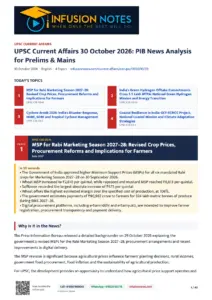
PDF — 30 October
40 pages · 240 KB